It was Sunday afternoon, a 500-cap embroidery order had to keep moving, and the remaining hats needed to be ready for shipping on Monday morning. Most of the order had already been produced with our standard cap backing, but 48 caps still remained. In a perfect shop, every supply shelf is stocked, every box is staged, and standard cap backing is right where it should be. Real production environments don't always work that way.
At that point, a decision had to be made: stop production and wait to order more backing from Madeira, or test a practical emergency option that might allow the final 48 caps to be completed in time. Ordering the proper backing would have been the next logical solution, but it would have invited delay and not have helped the hats that needed to be finished and shipped the following day.
The wrong answer was to pretend backing did not matter. Backing supports the front panel of the cap during stitching, and protects the integrity of the design and the visual alignment of the finished result. If the backing is wrong (too thin), or in the event that no backing is used, the embroidery can shift, distort, or lose precise registration.
JB's Preferred Cap Backing
For our regular cap embroidery productions, JB Screen Printing & Embroidery uses professional cap backing made specifically for cap frames. Our standard backing is Madeira E-Zee Cap Supreme 3.0 oz., a heavy weight tear-away cap stabilizer cut for structured and non-structured caps.
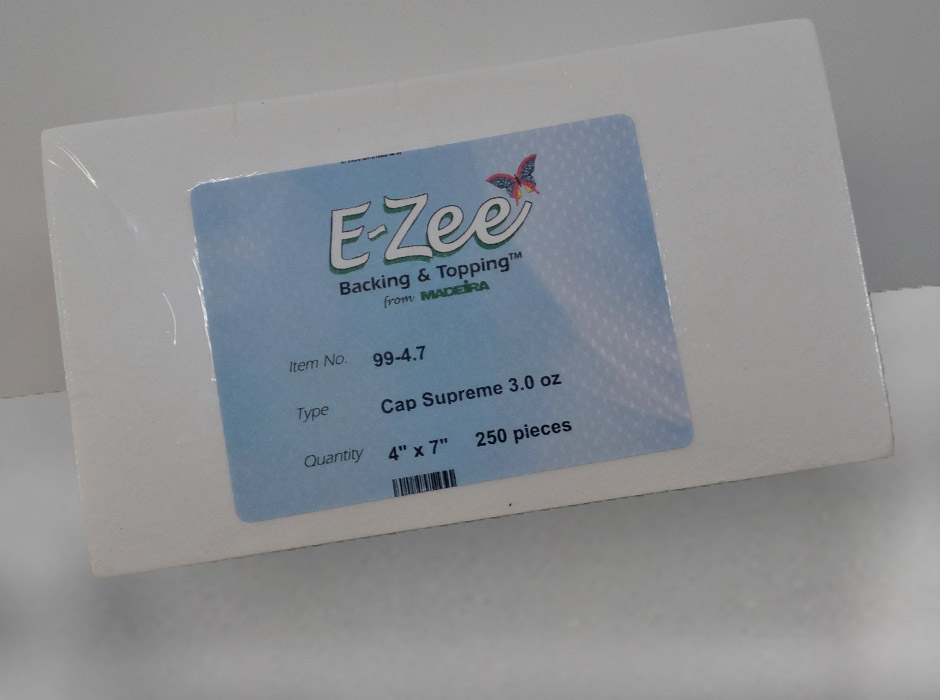
Proper cap backing is designed to support the front panel during stitching, maintain tension, reduce movement, and help the embroidered design hold clean registration. In other words, when we talk about an emergency workaround, we are not replacing the normal standard. We are comparing the insert against the proper material we would usually use. Because the job had to keep moving, the removable cap insert was tested only because it had similar support characteristics for this specific text-based, spatial design situation. Backing thickness also matters during cap embroidery. If the insert is too thick, it may support the design but become difficult to remove cleanly, sometimes requiring scissors instead of tearing away by hand. If the insert is too thin, it can defeat the purpose of using the insert in the first place because it may not properly support or stabilize the embroidery area during production. In an emergency, the goal is not to replace traditional cap backing as a normal production standard. The goal is to use a temporary support material only when it is firm enough to control movement during stitching, but still malleable enough to remove cleanly after the design is finished embroidering.
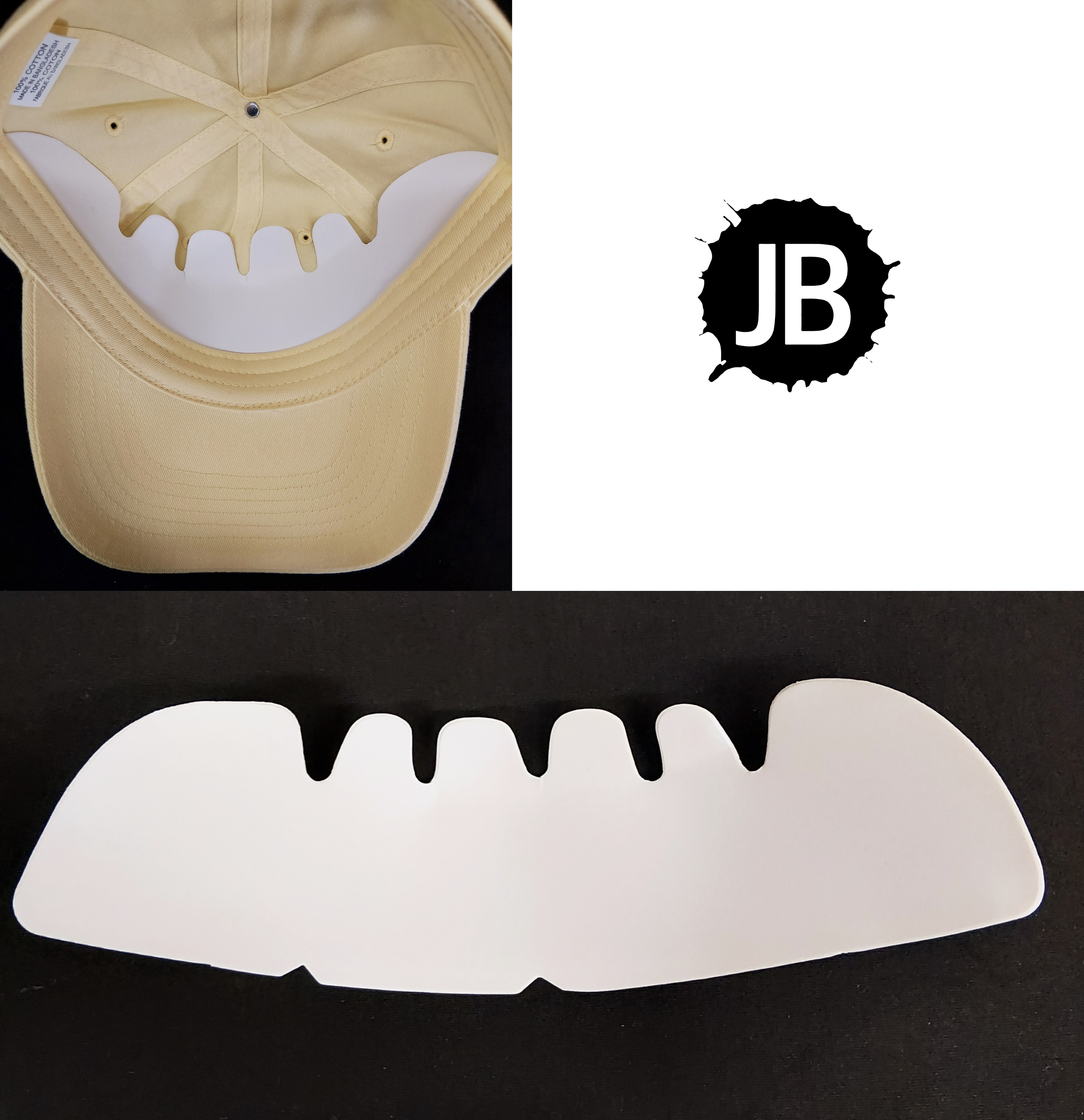
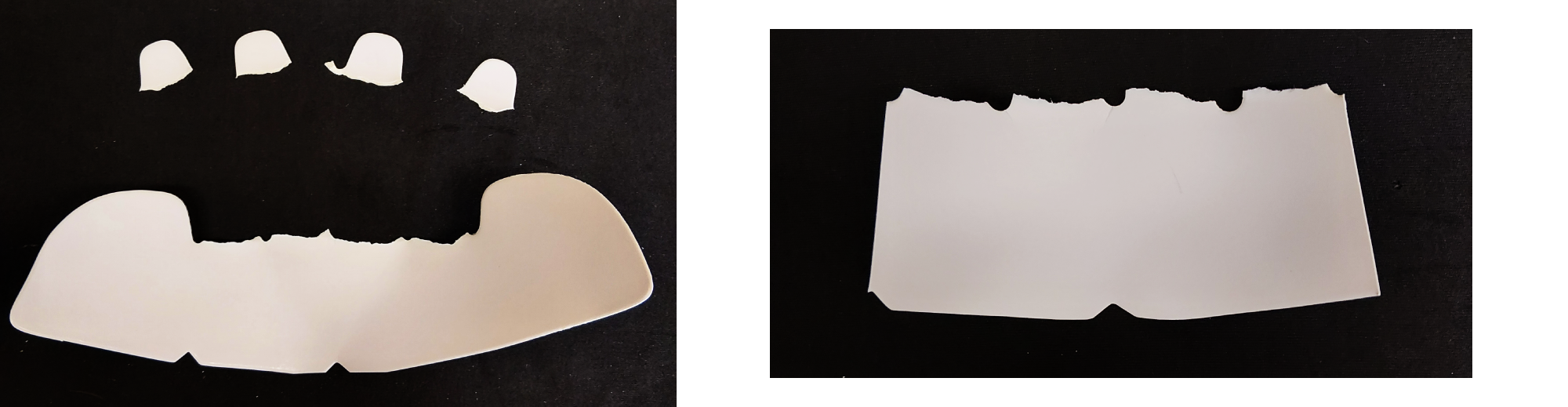
On this job, one of our employees jokingly suggested using the removable paper insert that comes inside many hats. In this scenario, the cap in question was the ValuCap VC300 Dad Cap. The insert is normally used to help the cap hold its shape before sale, and during shipping. Cap inserts should not be treated as a replacement for standard cap stabilizer. But it was thin enough, firm enough, easy to place, and already shaped to fit the curve of the cap.
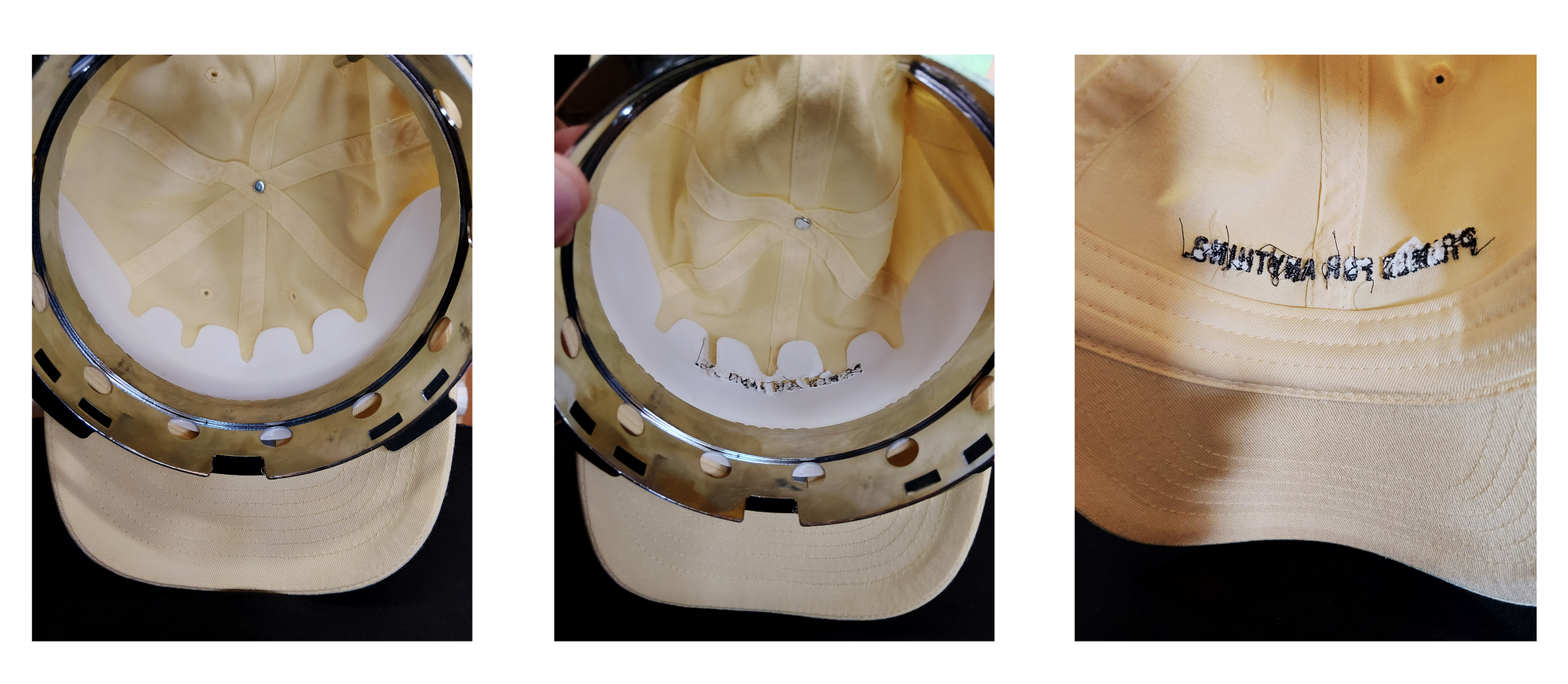
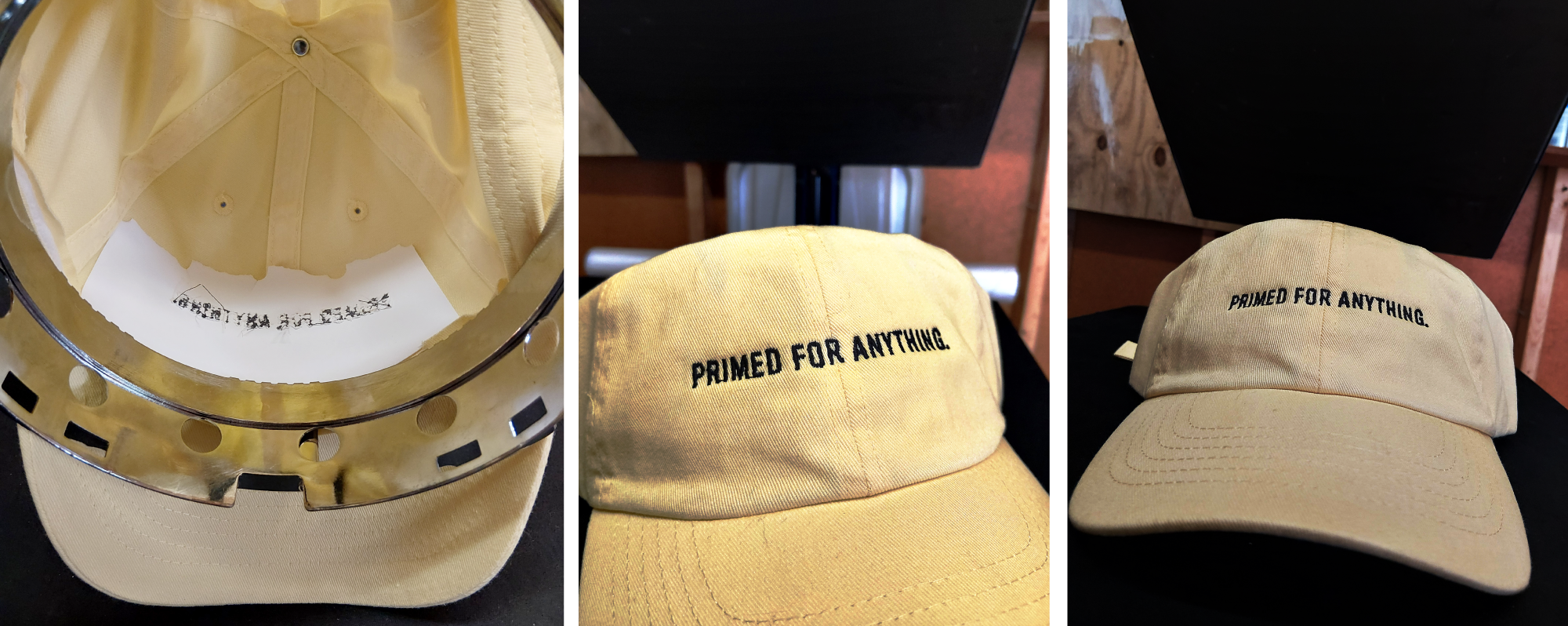
For cap embroidery, we discovered that the removable insert can sometimes act like a temporary tear-away backing. It can sit behind the embroidery area, provide light support during stitching, and tear away cleanly after the design has finished stitching.
For this specific cap order, the insert worked better than expected. It helped stabilize the front panel during embroidery, tore away easily after stitching, and did not leave any leftover material behind the design.
Pro Tip: Preventing Movement During Embroidery Stitching
To avoid shifting, pulling, or misalignment, the small arched sections along the top edge of the insert were removed before testing. If left in place, those arches can get caught as the cap frame rotates or moves during embroidery, which may cause the backing to shift and the design to stitch out of position.
By tearing away the arches first, the insert was able to sit flatter behind the front panel and provide temporary support without adding extra material in areas that could interfere with the movement of the cap attachment.
Removing the side edges also helped keep the support focused on the actual embroidery area. Instead of forcing the full insert behind the cap, the trimmed piece provided stability where it was needed while reducing the chance of the backing catching, shifting, or creating resistance during machine movement.
When This Workaround May — and May Not — Make Sense
Using a cap insert as emergency backing may be useful when standard cap backing has run out, the insert is clean and firm, the cap panel is stable, and the design has already been tested before continuing production.
It is most appropriate as a short-term emergency solution, not a replacement for traditional cap backing. The goal is not to be clever for the sake of being clever. The goal is to keep the job moving without sacrificing stitch quality or damaging the product.
This workaround tends to make the most sense with text-based designs, lighter layouts, or artwork with enough open space between stitched areas. When the design is not overly dense, the insert can serve a stabilizing purpose without being chewed up or weakened by excessive needle penetration.
It should not be used blindly and should be avoided for dense designs, puff embroidery, unstable cap panels, delicate materials, complex artwork with close stitch proximity, or any job where the test sewout does not match the embroidered result of a cap stabilized using traditional cap backing.
If the insert shifts, tears too early, leaves debris, affects tension, causes registration problems, or fails to support the design properly, stop and use proper cap backing. Emergency backing should solve a production problem, not create a bigger one, because a workaround is only useful when it protects the finished result.
Why This Matters for Customers
Customers may never see the backing, stabilizer, tension adjustments, trimming decisions, or production judgment behind an embroidered cap. But those choices affect how clean the embroidery looks when the order is delivered.
At JB Screen Printing & Embroidery, cap embroidery is reviewed as a production process, not just a logo placement. Materials, design density, cap construction, backing, thread tension, and finishing all matter. Whether we are using standard backing or testing an emergency workaround, the finished product still has to meet one standard of quality and craftsmanship.
Final Thought
The removable insert inside a hat is not a universal replacement for cap backing. Standard cap backing should remain the first choice for professional cap embroidery. But in a real production emergency, if the insert is clean, stable, tested, and tears away properly, it can sometimes help keep a cap embroidery order moving when the job still has to ship, and the show must go on.